
Cloud adoption continues to grow as businesses look for faster ways to launch services, scale operations, and reduce infrastructure costs. Whether you’re running a SaaS platform, managing customer workloads, or delivering cloud services, the ability to provision resources quickly has become a business necessity.
This is where cloud provisioning comes in.
Cloud provisioning allows organizations to deploy and manage computing resources without purchasing and maintaining physical infrastructure. It helps businesses allocate virtual machines, cloud storage, networking resources, and applications whenever they are needed.
As organizations adopt cloud-native environments, the benefits are clear. Companies report 20 to 30 percent of cost reductions along with improved productivity in 65 percent of cases, according to recent cloud ROI statistics. At the same time, over 70 percent of enterprises experience faster provisioning and deployment, enabling quicker innovation and response to market changes.
In this guide, we’ll explore what cloud provisioning is, how it works, the different types of provisioning models, the advantages and challenges involved, and how platforms like ITTRackNap help simplify cloud infrastructure provisioning for service providers and cloud businesses.
What Is Cloud Provisioning?
Cloud provisioning is the process of allocating, configuring, and managing cloud resources such as virtual machines, storage, databases, applications, and network services.
Simply put, it ensures users receive the resources they need when they need them.
Instead of manually purchasing servers and setting up hardware, businesses can access cloud resources on demand through a cloud platform. This approach reduces deployment time, improves flexibility, and allows organizations to scale without significant upfront investment.
A key component of cloud provisioning is resource provisioning, which focuses on assigning computing resources like CPU, memory, storage, and networking capacity to applications or users based on business requirements.
In modern environments, provisioning cloud computing is largely automated, allowing organizations to deliver services faster while maintaining operational efficiency.
How Does Cloud Provisioning Work?
Cloud provisioning follows a structured process that transforms a resource request into a fully functional service.
1. Resource Request
A user, application, or administrator requests cloud resources through a portal, API, or management platform.
2. Policy Validation
The cloud platform checks predefined rules, permissions, budgets, and compliance requirements before approving the request.
3. Resource Allocation
The required compute, storage, and networking resources are assigned automatically based on the request.
4. Service Deployment
Virtual machines, containers, databases, or applications are deployed and configured.
5. Monitoring and Optimization
Performance, utilization, security, and costs are continuously monitored to ensure resources remain aligned with business needs.
Cloud automation and orchestration tools play a critical role throughout this process by reducing manual effort and accelerating cloud infrastructure provisioning.
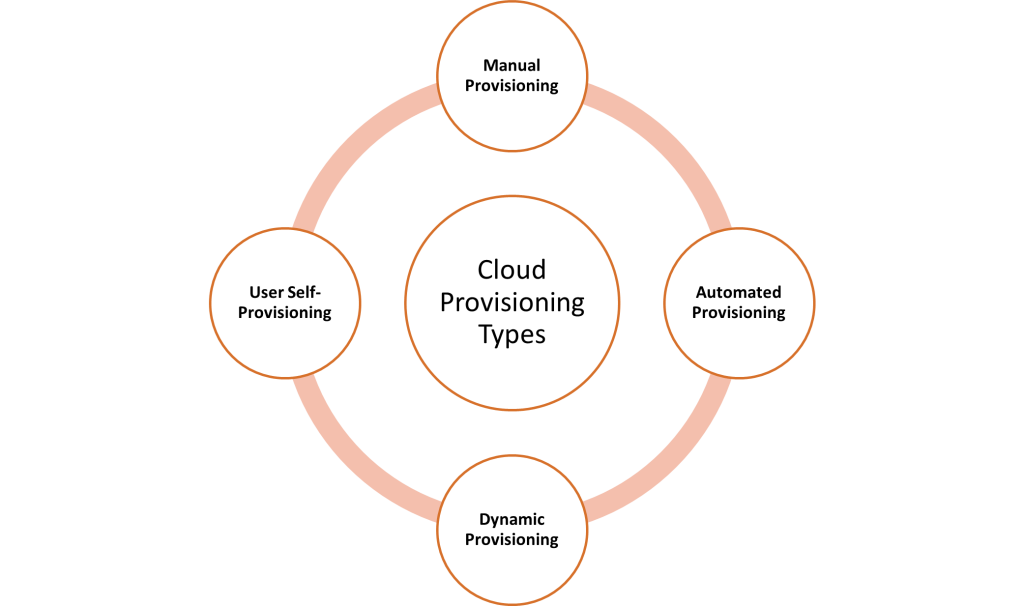
4 Types of Cloud Provisioning
Different businesses require different levels of control, automation, and scalability. The following provisioning models address a variety of operational needs.
 1. Manual Provisioning
Manual provisioning requires IT teams to configure and deploy resources individually.
Administrators handle every step, including server setup, storage allocation, networking, and application deployment.
Best for:
- Small environments
- Predictable workloads
- Highly customized deployments
Advantages:
- Greater control
- Easier customization
Limitations:
- Time-consuming
- Higher risk of human error
- Difficult to scale
2. Automated Provisioning
Automated provisioning uses scripts, templates, and orchestration tools to provision resources with minimal human intervention.
Instead of configuring resources manually, predefined workflows complete the deployment process automatically.
Best for:
- Growing businesses
- Multi-service environments
- Frequent deployments
Advantages:
- Faster resource provisioning
- Reduced operational effort
- Consistent deployments
Limitations:
- Initial setup requires planning
- Automation workflows need maintenance
3. Dynamic Provisioning
Dynamic provisioning automatically adjusts resources based on workload requirements in real time.
When demand increases, additional resources are allocated. When usage drops, resources are released.
Best for:
- E-commerce platforms
- SaaS applications
- Seasonal workloads
- High-traffic digital services
Advantages:
- Excellent scalability
- Better resource utilization
- Lower infrastructure waste
Limitations:
- Requires advanced monitoring
- Cost visibility can become challenging
Among all provisioning models, dynamic provisioning offers the highest level of flexibility for businesses dealing with unpredictable workloads.
Dynamic provisioning automatically adjusts resources based on workload requirements in real time. When demand increases, additional resources are allocated. When usage drops, resources are released.
While dynamic provisioning is often compared with on-demand provisioning, the two approaches serve different purposes. Learn more in our guide on On-Demand vs Dynamic Provisioning in cloud computing.
4. User Self-Provisioning
User self-provisioning allows customers or internal teams to request and manage resources through a self-service portal.
Resources are delivered automatically without requiring direct involvement from IT administrators.
Best for:
- Cloud service providers
- MSPs
- Enterprise IT teams
- Multi-tenant environments
Advantages:
- Faster service delivery
- Improved customer experience
- Reduced administrative workload
Limitations:
- Requires strong governance controls
- Needs effective usage monitoring
Advantages and Challenges of Cloud Provisioning
Cloud provisioning offers significant operational and financial benefits, but it also presents challenges that organizations must manage effectively.
Key Benefits:
- On-Demand Scalability: Resources can be quickly scaled up or down based on business needs.
- Reduced IT Costs: Eliminates large upfront hardware investments with pay-as-you-go pricing.
- Faster Time to Market: Applications and environments can be deployed within minutes.
- Improved Resource Utilization: Efficient allocation reduces waste and enhances performance.
- Enhanced Business Agility: Enables faster response to market changes and customer demands.
- Simplified IT Management: Automation minimizes manual tasks and ensures consistency.
- Multi-Cloud Flexibility: Supports seamless workload management across hybrid and multi-cloud environments.
Key Challenges:
- Human Errors: Manual provisioning increases the risk of misconfiguration, downtime, and security issues.
- Monitoring Complexity: Continuous performance and usage tracking can be difficult without proper tools.
- Security Risks: Misconfigured access controls and permissions can expose sensitive data.
- Skills Gap: Effective cloud management requires specialized expertise that some organizations lack.
- Cost Management: Usage-based pricing can lead to unexpected expenses without proper visibility and optimization.
- Limited Automation: Reliance on manual processes slows provisioning and reduces consistency.
- Billing Complexity: Managing subscriptions, usage, invoicing, and renewals across services can be challenging.
How ITTRackNap Streamlines Cloud Provisioning
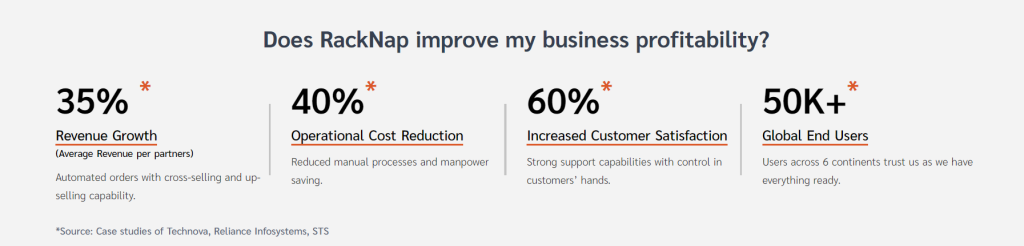
As cloud businesses scale, managing infrastructure provisioning manually becomes complex and inefficient. ITTRackNap simplifies and automates the entire provisioning lifecycle through a unified platform.
1. Centralized Product Catalog Management
Easily launch, manage, and update cloud services, infrastructure offerings, and subscription plans from a single catalog. This enables faster service rollouts and better responses to change market demands.
2. Revenue Optimization Tools
Identify upsell, cross-sell, and bundling opportunities to increase average revenue per user while delivering greater customer value.
3. Flexible Pricing and Discounts
Create customized pricing models, promotional offers, and discount strategies tailored to diverse customer needs and business goals.
4. White-Label Branding
Deliver a fully branded customer experience by customizing the platform with your own identity. This helps build trust and strengthen customer relationships.
5. Simplified Order Management
Manage subscriptions, recurring services, and usage-based products efficiently through automated workflows that reduce manual effort.
6. Automated Billing and Financial Operations
Streamline invoicing, payment tracking, renewals, and financial processes. This reduces errors and improves overall operational efficiency.
Conclusion
Cloud provisioning plays a critical role in modern cloud environments. It enables organizations to deploy, configure, and manage resources quickly while supporting scalability, efficiency, and business growth.
From manual provisioning and automated provisioning to dynamic provisioning and user self-provisioning, each model serves different business requirements and operational goals.
The advantages of cloud provisioning include faster deployment, improved resource utilization, lower infrastructure costs, and greater business agility. At the same time, organizations must address challenges such as security, monitoring, cost management, and operational complexity.
As cloud environments continue to evolve, automation is becoming essential. Businesses that combine effective resource provisioning and dynamic provisioning strategies with a purpose-built platform like ITTRackNap are better positioned to scale operations, improve customer experiences, and remain competitive in a rapidly changing market.
Ready to automate your cloud provisioning and simplify service delivery? Explore how ITTRackNap can help streamline your cloud operations, schedule a demo now.
FAQs
What is provisioning in cloud computing?
Provisioning in cloud computing is the process of allocating, configuring, and managing cloud resources such as virtual machines, storage, databases, and network access to meet business requirements.
How does cloud provisioning work?
Cloud provisioning works by processing resource requests, validating policies, allocating resources, deploying services, and continuously monitoring performance. Automation tools help streamline the entire workflow.
What is resource provisioning in cloud computing?
Resource provisioning is the allocation of specific computing resources such as CPU, memory, storage, and networking capacity based on user or application requirements.
What are the three types of provisioning in cloud computing?
The three primary types are manual provisioning, automated provisioning, and dynamic provisioning. Each offers different levels of control, automation, and scalability.
What is dynamic provisioning in cloud computing?
Dynamic provisioning is an on-demand approach that automatically allocates and scales resources based on real-time workload requirements without manual intervention.
What are the advantages of cloud provisioning?
The advantages of cloud provisioning include improved scalability, reduced IT costs, faster deployment, better resource utilization, simplified management, and greater business agility across cloud environments.